
September 22, 2026
Ethanol Fuel and Your Boat: Preventing Fuel System Problems in Florida Heat
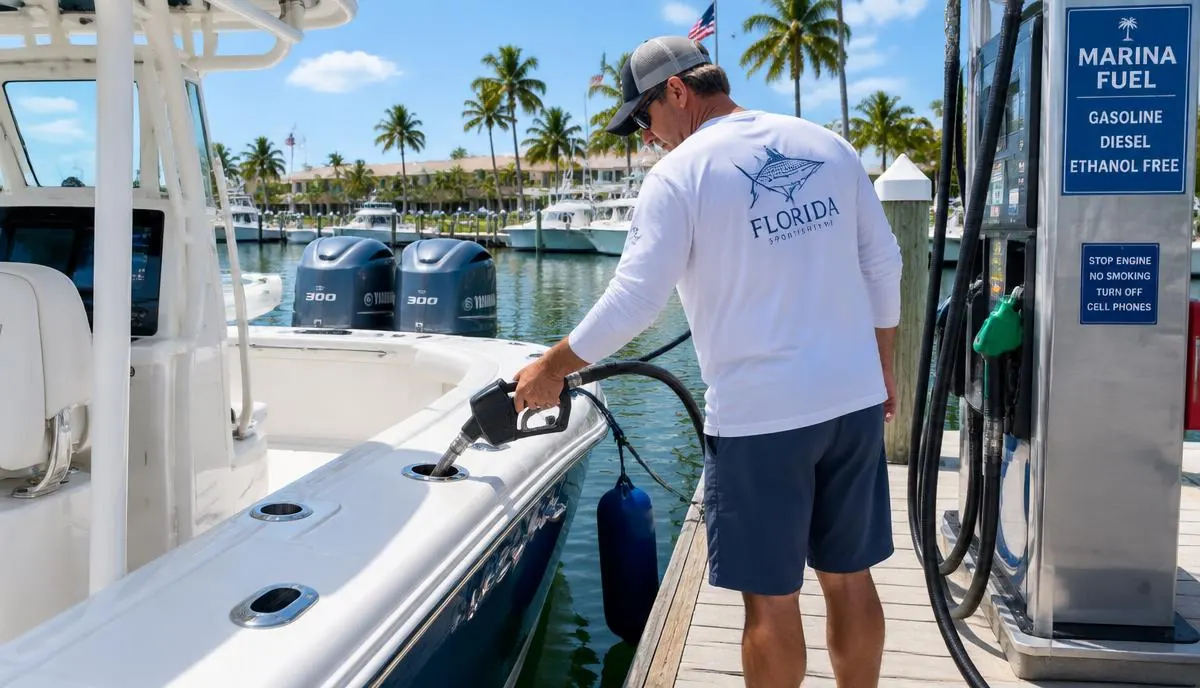
Most gas sold at roadside stations contains ethanol, usually around ten percent. Cars handle it well because they burn through a tank in a week or two and their fuel systems are sealed. Boats are different. A boat tank breathes through a vent, often sits for weeks between trips, and lives in some of the most humid air in the country. That combination is where ethanol causes trouble.
What ethanol does in humid air
Ethanol is an alcohol, and alcohol attracts water. Every time the air temperature changes, your fuel tank breathes in and out through its vent. In Tampa Bay, that air carries a lot of moisture, especially on summer nights. Some of that moisture condenses inside the tank, and the ethanol in the fuel absorbs it.
Up to a point, the water stays mixed in with the fuel and passes through the engine in tiny amounts. The trouble starts when the fuel cannot hold any more.
Phase separation, explained simply
When ethanol blended fuel absorbs enough water, the ethanol and water separate from the gasoline and sink to the bottom of the tank as a cloudy layer. This is called phase separation. It is not reversible by shaking the tank or adding more fuel.
Two problems follow. First, the layer at the bottom is mostly water and alcohol, and your fuel pickup sits near the bottom of the tank. If the engine draws that layer in, it will run poorly or stop. Second, the gasoline left on top has lost some of its ethanol, which lowers its octane and changes how it burns.
Temperature swings make phase separation more likely, because cooler fuel can hold less water. A boat that sits through a few weeks of hot days and cooler nights is a prime candidate.
Ethanol and older fuel system parts
Ethanol is also a solvent. On older boats, it can loosen varnish and deposits that have built up in tanks and lines over years, sending that debris toward filters and carburetors. Some older hoses, gaskets, and fiberglass tanks were not designed for ethanol and can soften or break down over time. If your boat is older and has never had its fuel system looked at, that is worth knowing.
Choosing ethanol-free fuel
Ethanol-free gas is widely available at marinas and at some road stations in Florida. It costs more per gallon, but for boats that sit between trips it removes the main cause of phase separation. Many owners choose it for that reason alone.
If you do use ethanol blended fuel, the key is to use it while it is fresh and avoid letting it sit for long periods in a partially filled tank.
Stabilizer habits that actually help
- Add a marine fuel stabilizer when you fill up, not after the fuel has already been sitting. Stabilizer slows fuel aging but does not undo it.
- Run the engine for a few minutes after adding stabilizer so treated fuel reaches the lines and the engine.
- Follow the dosage on the bottle. More is not better.
- Treat every fill if the boat goes more than a couple of weeks between trips.
How long gas lasts in a boat tank
There is no single answer, because it depends on heat, humidity, how full the tank is, and whether the fuel was treated. In general, untreated ethanol blended fuel starts to degrade within a month or so in warm weather. Stabilized fuel lasts longer, and ethanol-free fuel holds up better still.
A practical rule is to buy only the fuel you expect to use in the next few weeks. If you know the boat will sit for a longer stretch, decide ahead of time whether to keep the tank nearly full with stabilized fuel, which leaves less room for moist air, or to plan your trips so the fuel turns over regularly.
Signs your fuel is causing trouble
- The engine runs fine at the dock but stumbles once you get on plane.
- You see a distinct layer or cloudiness in your separator bowl.
- The fuel smells sour or looks darker than fresh gas.
- The motor started having problems right after sitting for a while.
What you can do yourself
Check your water separator bowl before each trip if it has a clear bottom. Keep spare filters on board. Make sure your tank vent is not blocked, since a clogged vent can starve the engine. Keep receipts showing when you last fueled so you know how old the fuel in the tank is.
When to call a pro
If you suspect phase separation, do not try to burn the bad fuel through the engine. It needs to be removed and the system checked. The same goes for repeated filter clogs, persistent water in the separator, or an older boat that has never had its fuel system inspected. Call (888) 720-9289 and we can look at your fuel system at your dock or driveway.